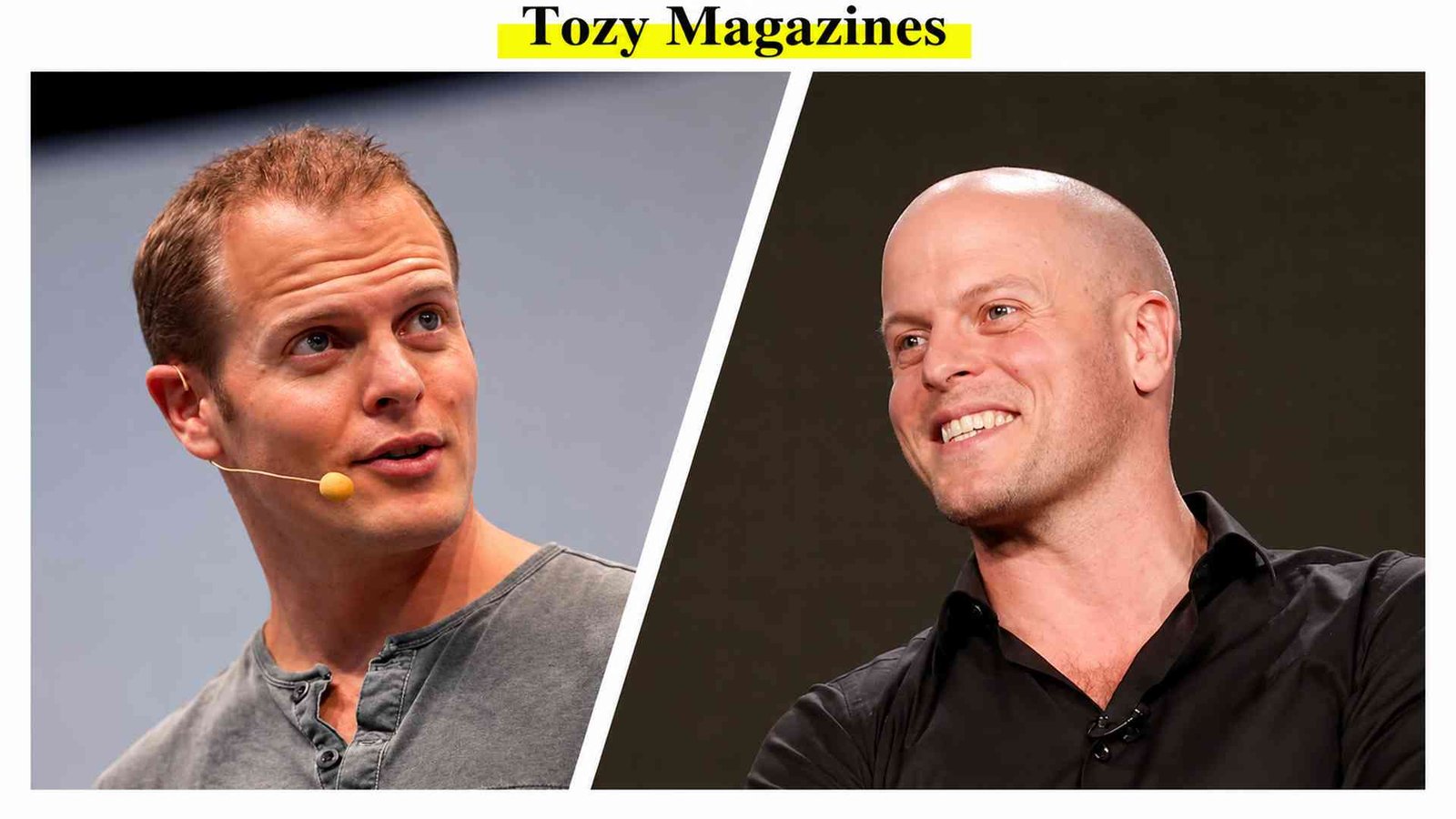
Tim Ferriss is an American author, podcast host, investor, and entrepreneur best known for The 4-Hour Workweek and The Tim Ferriss Show. He has written five No. 1 New York Times and Wall Street Journal bestsellers, and his podcast has passed one billion downloads. In 2026, he remains active through new podcast episodes, writing, investing, and other creative projects.
Here’s what to know about how Ferriss moved from a Princeton graduate and company founder to a bestselling author, long-form interviewer, and early-stage investor, plus how his ideas and projects have changed over time.
Who Is Tim Ferriss?
Timothy Ferriss was born in 1977. He is 49 years old in 2026. He is a writer, podcast host, investor, and former company founder. His best-known book is still The 4-Hour Workweek. His biggest ongoing media project is The Tim Ferriss Show.
His official biography says he has written five No. 1 New York Times and Wall Street Journal bestsellers. It also lists early work as an investor or adviser with firms such as Uber, Facebook, Shopify, Duolingo, and Alibaba. His podcast has passed one billion downloads.
That mix makes Ferriss hard to place in one box. Some people know him for business. Others found him through books, health tests, interviews, or startup work. His recent projects also include a card game and a new book. He has also backed work in mental health research.
Princeton and His Early Career
Ferriss graduated from Princeton University in 2000. He studied East Asian studies. While at Princeton, he tried small business ideas. One was a paid speed-reading class. Those early tests gave him a taste of selling and teaching.
After college, he moved into business. In 2001, he founded BrainQUICKEN. It was a sports nutrition company and later became known as BodyQuick. The business grew, but it also took a lot of his time.
That problem changed how he thought about work. He began cutting tasks that added little value. He also looked for work that could be done by a system instead of by him.
A 2025 Harvard Business School Working Knowledge profile traces this part of his career. It says Ferriss used the 80/20 rule to study where his business results came from. He cut low-value work and used more automation. The same ideas later became part of his first major book.
His story did not start with a media brand. It started with a small company and a common problem. He was spending too much time on work that did not matter enough.
The 4-Hour Workweek Changed His Career
The 4-Hour Workweek came out in 2007. It changed Ferriss’s career. The book asked readers to stop treating long hours as proof of value. It argued that work should support life, not take it over.
The title sounds extreme. The main idea is wider than a four-hour schedule. Ferriss wrote about cutting waste, setting limits, and using simple systems. He also focused on results rather than time spent at a desk.
The book became closely linked with the idea of lifestyle design. In plain terms, that means shaping work around clear life goals. It asks people to decide what they want first. Then they can build work around that choice.
That idea reached founders, freelancers, remote workers, and office workers. Many were looking for more control over their time. The book arrived before remote work became common. That timing helped it stand out.
Ferriss also made the 80/20 rule a key part of his advice. The rule asks which small share of actions creates most of the result. His point was not to avoid hard work. It was to stop wasting hard work.
Another idea linked to Ferriss is fear-setting. It turns a vague fear into a written exercise. A person writes what could go wrong. Then they note ways to prevent the problem and ways to recover. The method can make a hard choice feel more concrete.
His Books Moved Into New Areas
Ferriss did not keep writing the same book. He took his test-and-learn style into other fields.
The 4-Hour Body came out in 2010. It focused on health, fitness, and personal tests. The 4-Hour Chef followed in 2012. It used cooking to explore how people can learn skills faster.
His work then changed again. Tools of Titans came out in 2016. It gathered lessons from people he had interviewed. The guests came from business, sports, science, art, and other fields.
Tribe of Mentors followed in 2017. It collected shorter advice from a large group of people. The book focused on choices, habits, books, failures, and lessons learned.
The change across these books is important. His early work focused on time, work, the body, and learning. His later work focused more on how skilled people think and make choices. It also looked at how they train, recover, and deal with setbacks.
His newer work goes one step further. Ferriss now talks more about focus and limits. He gives more weight to health, close ties, and saying no. The question is not only how to do more. It is also what is worth doing at all.
The Tim Ferriss Show Became His Main Platform
Ferriss launched The Tim Ferriss Show in 2014. The show is built around long talks with guests. Many episodes run much longer than a normal business interview.
He asks guests about more than success. He asks about mistakes, habits, books, fears, sleep, training, and hard choices. He often wants to know what changed a person’s path. That gives the talks more depth than a short press interview.
The guest list covers many fields. It includes founders, writers, doctors, athletes, actors, investors, scientists, and researchers. That range brought in readers and listeners with very different interests.
The podcast also changed over time. Harvard Business School reported that Ferriss paused the show in 2024. He was thinking about what he wanted from the format after ten years. He later returned with changes to keep the work fresh.
By 2026, the show had passed one billion downloads. It was still active. New episodes covered AI, learning, friendship, health, focus, grief, writing, and career change.
The show is no longer just a hunt for the perfect routine. It has become a place to compare many ways of solving hard problems. That shift mirrors the change in Ferriss’s own work.
Tim Ferriss as an Investor
After The 4-Hour Workweek became a hit, Ferriss spent more time around young tech firms. His bio lists early investing or advisory work with Uber, Facebook, Shopify, Duolingo, and Alibaba.
Harvard Business School says that in 2008 he began making smaller startup bets. He put about $10,000 to $20,000 at a time into a small group of companies. His aim was not only to make money. He also wanted to learn how startups worked from the inside.
That work gave him exposure to startup finance, deals, product design, and growth. It also added a new part to his public image. He was no longer only an author who wrote about work. He was taking part in the tech world he often discussed.
Over time, Ferriss became more careful about new startup commitments. That fits a theme in his later work. More options are not always better. Every new project also takes time and attention.
Readers who enjoy business profiles can also read our feature on Seung Yong Chung, a Korean-American businessman whose career grew outside the usual celebrity spotlight.
Support for Mental Health Research
Ferriss has also used money and public support to back mental health research. In 2019, Johns Hopkins Medicine named him among the private donors who helped fund its Center for Psychedelic and Consciousness Research.
The center studies how psychedelic compounds affect the brain and behavior. It also studies possible medical uses under controlled research conditions. Its work includes learning, memory, mood, and several health conditions.
Ferriss has continued to support work tied to mental health and brain research. This part of his career matters. It shows how far his public work has moved beyond the old “productivity expert” label.
What Tim Ferriss Is Doing in 2026
Ferriss is still making new episodes of The Tim Ferriss Show. His site published fresh episodes throughout 2026. Topics included AI, creativity, friendship, health, reinvention, and how to simplify life.
He also continues his 5-Bullet Friday email. The newsletter shares books, tools, ideas, and things he has been using or exploring.
A major current project is a new book with writer Neil Strauss. Ferriss has used The No Book as a placeholder title. In April 2026, he said the draft had reached about 850 pages. He also said it still needed major cuts.
The book centers on saying no and protecting time. It also looks at how people can change or cancel commitments after saying yes. Ferriss has said test readers were already using parts of the draft in daily life.
Another newer project is COYOTE. It is a card game made with Elan Lee and the Exploding Kittens team. Ferriss said he worked on it for about two years. The game went on sale in 2025. His site says it reached more than 8,000 retail locations worldwide.
These projects show where his thinking has moved. An older question was often, “How can I do this faster?” A newer question is closer to, “Should I do this at all?” That change is small in words. It is big in meaning.
How His Ideas Have Changed
Ferriss became famous for ideas about freedom, remote work, and doing more with less time. Many of those themes now feel normal. Remote jobs are common. Online firms are common. Podcasts and creator-led businesses are also part of daily media.
That makes his newer work useful for understanding his career. He is not simply repeating his 2007 message. He now talks more about the cost of too many goals. He also talks about too many commitments and too much competition for attention.
He still values systems and small tests. He still likes to study how people learn. But his work now gives more space to rest, close ties, health, and careful choice.
He has also spent more time on long talks, science, and giving. Some of his newer projects take years, not weeks. That is a different pace from the quick tests that first made him famous.
Why His Audience Still Follows Him
Ferriss has stayed relevant because his work keeps changing with his questions. He has been a company founder, author, investor, podcast host, TV host, game maker, and supporter of research.
Those roles look different. Yet they share one habit. He likes to break a hard problem into smaller parts. He tests ideas. He learns from people with deep skill. Then he changes course when the old plan no longer fits.
His podcast is a good example. A book gives one set of ideas at one point in time. A long-running show can change as new guests and new problems arrive. It lets listeners hear that change in public.
Tim Ferriss Today
Tim Ferriss is still best known for The 4-Hour Workweek. But that book is now only one part of his story. His later books, podcast, investing, research support, and new projects show a much wider career.
In 2026, his work is less about squeezing every minute for more output. It is more about using time with care. He still studies how people learn, perform, and make choices. He also asks what deserves attention in the first place. That wider question helps explain why people who found him through a 2007 business book still follow his work today.
