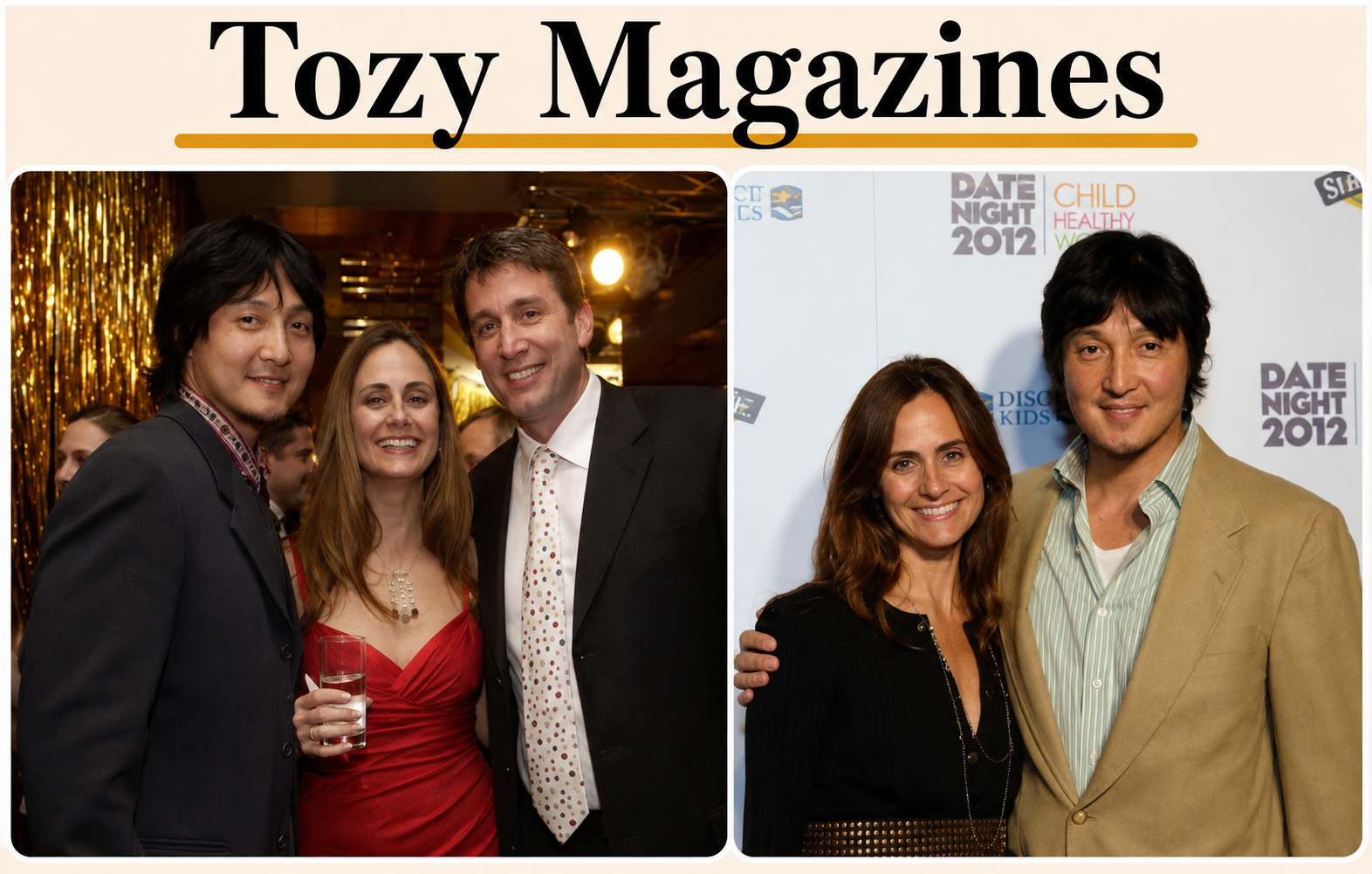
Can a person become famous just by staying private? Seung Yong Chung proves that it can happen. He built a respected marketing company from scratch, yet most people know his name because he was once married to actress Diane Farr.
Chung never chased fame. He rarely gave interviews about his personal life. Still, people keep searching his name years after his marriage ended.
So who is the man behind the name? His story moves from Seoul to Maryland, then to a business built in Los Angeles. Here is the full picture.
Profile Overview
| Detail | Information |
|---|---|
| Full Name | Seung Yong Chung |
| Known For | Co-founder and CEO of Cashmere Agency; Diane Farr’s ex-husband |
| Date of Birth | 1970 |
| Place of Birth | Seoul, South Korea |
| Moved to U.S. | Around 1972, at age two |
| Nationality | Korean-American |
| High School | Gaithersburg High School, Maryland |
| Education | Virginia Tech (B.S. Finance, 1988-1992); George Washington University (M.S. Information Systems, 1993-1995) |
| Father | Young Ja Chung, president of Intraco Korea |
| Mother | Tae Wha Chung, nurse at George Washington University Hospital |
| Company | Cashmere Agency (co-founded 2003 with Ted Chung) |
| Ex-Wife | Diane Farr (married 2006) |
| Children | Beckett Mancuso Chung, Sawyer Lucia Chung, Coco Trinity Chung |
| Current Base | Los Angeles, California |
Who Is Seung Yong Chung?
Seung Yong Chung is a Korean-American businessman who co-founded Cashmere Agency and is widely known as actress Diane Farr’s ex-husband.
He built Cashmere Agency around one core idea. Brands connect better with people when marketing understands culture, not just numbers. That idea shaped his entire career.
His name reaches a wider crowd for a different reason. He married Diane Farr, an actress known for Numb3rs, Rescue Me, and Fire Country. Their marriage pulled his name into celebrity news, even though he never wanted that kind of spotlight.
Chung stands apart from the usual “celebrity spouse” story. He built a real, respected career of his own. To understand him fully, you have to look past the marriage and into the work that came before and after it.
Growing Up Between Two Cultures
Seung Yong Chung was born in 1970 in Seoul, South Korea. His family moved to the United States when he was about two years old, settling in 1972.
That early move shaped his whole life. He grew up in Maryland and attended Gaithersburg High School, while his home still held onto Korean roots. Many children of immigrants know this exact feeling. One world exists at school. A different world exists at the dinner table.
His parents built a stable life in a new country through hard work. Young Ja Chung, his father, led Intraco Korea, a Seoul-based company that handled the import and export of manufactured goods. Meanwhile, his mother, Tae Wha Chung, worked as a nurse and later held a role at George Washington University Hospital in Washington, D.C.
This mix of business and healthcare likely shaped him early. His father showed him how trade and strategy work. His mother showed him patience and steady care. Both lessons would later shape how he ran his own company.
A Finance Degree Paired With a Tech Degree
Chung took his studies seriously. He joined Virginia Tech’s Pamplin College of Business and studied there from 1988 to 1992, earning a Bachelor of Science in Finance.
Finance builds a certain kind of discipline. It teaches you to read numbers, manage risk, and plan ahead. That training later helped him understand the business side of an industry many people assume runs on pure creativity alone.
He kept learning. In 1993, he began a Master of Science in Information Systems at George Washington University, finishing in 1995. This second degree gave him a rare edge for that time. He understood both money and technology, years before most marketing companies used computers for much beyond email.
That combination makes sense today. Modern marketing runs on data and digital platforms. Chung had already built that foundation long before the industry needed it.
Early Career Before Starting His Own Business
Before building his own company, Chung gained experience inside the corporate world. He worked in roles tied to consulting and technology, learning how large companies run from the inside.
He also worked at Ernst & Young LLP, one of the largest professional services firms in the world. That job showed him how major corporations plan strategy, manage money, and make big decisions under pressure.
These years were quiet, not flashy. They were building blocks. Chung was gathering the skills he would need before taking the risk of starting something of his own.
By the early 2000s, he had a rare mix of strengths. He understood numbers, technology, and how large organizations actually work day to day.
Building Cashmere Agency From Scratch
In February 2003, Chung took a leap. He co-founded a marketing company with Ted Chung, a partner who helped shape the agency’s direction for years. The business first went by the name Chung and Associates before growing into what became Cashmere Agency.
Cashmere took a different path than older advertising firms. Instead of pushing broad ads at broad audiences, the agency focused on culture. That meant studying music, entertainment, sports, and social trends to help brands connect with people in ways that felt real.
That approach worked. Over time, Cashmere built a client list that included some of the biggest names in business, such as Google, Netflix, Apple, Amazon, Disney, Adidas, BMW, Meta, and WarnerMedia. A client list like that does not happen by luck. It happens when a company delivers work that truly connects with people.
The agency’s reputation grew steadily:
- Named Multicultural Agency of the Year by AdAge in 2019
- Listed on AdAge’s A-List Agencies to Watch in 2020
- Named an A-List Standout Agency by AdAge in 2021
- Earned recognition at the Cannes Lions International Festival of Creativity
These honors reflect years of steady, respected work in a competitive field.
Becoming CEO and a Major Company Deal
For years, Chung worked as president and co-founder of Cashmere, shaping the agency from behind the scenes. In 2021, that role became official. He stepped into the position of Chief Executive Officer, taking charge of the company’s strategy and financial health.
That same year brought a major shift for the company. Media.Monks, part of the global network S4 Capital, announced a merger with Cashmere. The deal linked Cashmere’s cultural marketing skill with a much larger international network of resources and clients.
Cashmere did not lose its identity in the deal. It kept doing the culture-first work it was always known for, now with more reach and support. For Chung, this merger marked the payoff of nearly two decades of steady growth.
How He Met Diane Farr
Chung’s personal life became public because of his relationship with Diane Farr, an actress known for television roles across American homes. Their paths crossed in the early 2000s, and what began as a connection between two different worlds slowly turned serious.
Farr later spoke openly about their early days together. On an episode of Oprah’s Where Are They Now, she recalled that early on, Chung gently warned her their relationship might create difficulty with his parents. This was not a warning about himself. It came from an honest place, rooted in his family’s hope of keeping certain Korean traditions alive.
That honesty says something about him. Rather than avoid a hard topic, Chung brought it into the open. Farr has said they worked through that concern together, and their bond grew stronger from there.
A Wedding That Honored Two Cultures
Seung Yong Chung proposed to Diane Farr in October 2005. The couple married the following year, in June 2006, at a ceremony in Mammoth Lakes, California.
Their wedding blended more than one tradition. Reports say the ceremony included five Buddhist monks, a detail that honored Chung’s heritage. This mix of Korean and Western traditions gave the wedding a deeper meaning. It became a symbol of two families and two cultures joining with respect.
Three Children in Quick Succession
Family life moved fast. Their first child, a son named Beckett Mancuso Chung, was born in March 2007. Just over a year later, in August 2008, Diane gave birth to twin daughters, Sawyer Lucia Chung and Coco Trinity Chung.
Farr has joked about her children being like Irish triplets, since all three arrived within about sixteen months of each other. Anyone who has raised young children close in age knows how demanding those early years can be.
The family reportedly settled in La Cañada Flintridge, California, a quiet, family-focused community. Chung kept his role as a father mostly private, though Farr has shared small glimpses of life raising three children so close in age.
When the Marriage Ended
Here the public record gets unclear, and it deserves an honest explanation rather than a guess dressed up as fact.
Several entertainment sites report Chung and Farr divorced in 2020, after 14 years of marriage. But Wikipedia, citing stronger sourcing, states the divorce actually happened in 2017. Supporting that earlier date, Farr wrote in a 2024 Elle essay about a new relationship roughly seven years after her divorce, which points back toward 2017.
A December 2020 Instagram post from Farr already called Chung her “ex husband” in a warm, lighthearted holiday message, which suggests the divorce was already final well before that post.
Because reports genuinely conflict, the fair answer is this. The marriage ended sometime between 2017 and 2020, with stronger evidence pointing toward 2017. Neither Chung nor Farr has explained the reasons behind the split, and both have kept those details private.
Staying Close as Co-Parents
What stands out most about this divorce is the lack of public drama. There were no public fights, no bitter interviews, and no attempts by either side to use the media against the other.
Farr has spoken about staying on good terms with Chung. In a 2020 Christmas post, she jokingly defended him for wearing a silly headband their son had bought him. That small, warm moment says a lot. Even after the marriage ended, the family still gathered for holidays, including during the 2020 COVID lockdowns.
This says something good about both parents. Raising three children together after a divorce takes real patience. Chung appears to have handled it the same way he handles most things. Quietly, respectfully, and without seeking public attention.
Life After the Marriage Ended
Since the divorce, Chung has kept leading Cashmere Agency, focused on business rather than his personal story. He has not remarried publicly, and there are no confirmed reports of a new high-profile relationship.
He remains based mainly in Los Angeles, where Cashmere continues operating within the larger Media.Monks network. His approach to life after the marriage mirrors his approach before it. Stay focused on the work. Keep personal matters private. Let results speak for themselves.
That consistency is part of what makes his story stand out. Many people connected to a famous ex-spouse try to build a public brand around it. Chung never did. He let his agency’s growth speak instead.
Why People Still Search His Name
Interest in Seung Yong Chung continues for two clear reasons. People who remember Diane Farr from television want to know more about the man she married and later divorced. And people inside marketing respect what he built through Cashmere Agency.
His story offers something different from typical celebrity-spouse content. It carries no scandal, no drama. Instead, it shows a steady climb built on education, hard work, and an unusual skill for turning two cultures into a real business advantage.
That blend, Korean heritage paired with an American business education, became the foundation of an agency that helped some of the world’s biggest brands connect with real audiences. Few people manage to turn their own identity into that kind of lasting professional strength.
Final Thoughts
Seung Yong Chung built a life worth admiring, even for people who only learned his name through Diane Farr. He turned a childhood spent between two cultures into a career built on understanding people.
His marriage brought him public attention for a while, but his work at Cashmere Agency remains the deeper part of his story. Through steady leadership and real respect for culture, he built something that outlasted the spotlight that first introduced him to the public.
In the end, his life offers a simple lesson. Not every meaningful career needs constant attention. Sometimes the strongest legacy comes from quiet, steady work, built one honest choice at a time.
You May Also Read: Miah Harbaugh: Marriage, Kids & Life After Jim Harbaugh
