A car accident can make even routine decisions feel difficult. The best response is to focus first on safety, then preserve the facts, and finally start an organized claim process. Understanding how car insurance works before a crash happens can also make the next steps less confusing.
Every accident is different, and the right path can depend on injuries, vehicle damage, state rules, policy language, and whether fault is disputed. Still, a calm checklist can help drivers avoid rushed decisions that complicate repairs, insurance communication, or settlement discussions later.
The First Few Minutes After a Crash
Check yourself and others for injuries, call emergency services when anyone may need help, and move vehicles out of traffic only if it is safe and legal to do so. Turn on hazard lights, watch for passing vehicles, and stay away from leaking fluids, fire, or other immediate hazards. Physical safety matters more than collecting evidence. Wearing a seat belt remains one of the most important protections in a collision, as federal seat belt safety guidance explains.
Avoid arguing with the other driver or making statements such as “it was all my fault.” You may be upset, missing information, or unaware of road conditions and hidden vehicle damage. Stick to observable facts and cooperate with responding officers.
How to Document the Scene
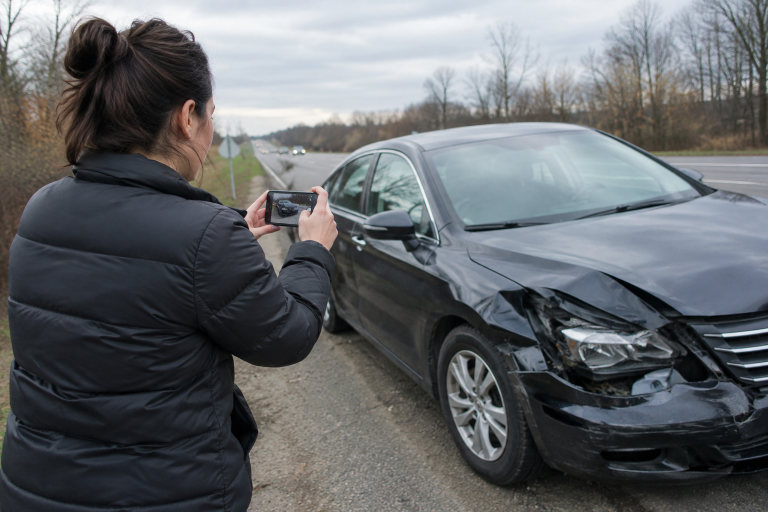
Once everyone is safe, use your phone to create a record before vehicles are moved, weather changes, or debris is cleared. Take wide photos showing the overall scene, then closer images of each vehicle’s damage. Photograph license plates, traffic signals, road signs, lane markings, skid marks, debris, and the surrounding road conditions when possible.
Write down the time, location, weather, lighting, and direction each vehicle was traveling. Exchange names, phone numbers, driver’s license details, insurance information, vehicle descriptions, and registered-owner information if the driver does not own the vehicle. If witnesses saw the collision, ask for their names and contact details. Do not post crash photos or accusations on social media while the claim is unresolved.
When to Contact Police and Your Insurer
A police report may be appropriate when there are injuries, significant damage, a hit-and-run, suspected impairment, unsafe road conditions, or disagreement about what happened. Requirements vary by location, so follow instructions from law enforcement and your state’s reporting rules.
Notify your insurer promptly, even if you believe another driver caused the crash. Early notice can help preserve evidence and clarify what information, inspections, or estimates are needed. Ask for a claim number and record the name, phone number, and email address of the claims representative.
Insurance Coverage That May Apply
The coverage involved depends on the facts and the policy. The consumer overview of auto insurance coverage from the National Association of Insurance Commissioners can help drivers review common policy terms. Coverage that may be relevant includes:
- Liability coverage: May pay for injuries or property damage caused to others.
- Collision coverage: May help pay to repair the insured vehicle after a crash with another vehicle or object.
- Comprehensive coverage: May apply to non-collision losses, such as theft, hail, fire, or vandalism.
- Uninsured or underinsured motorist coverage: May help when an at-fault driver lacks sufficient insurance.
- Medical payments or personal injury protection: May help with eligible medical expenses, depending on the policy and state.
- Rental reimbursement: May help pay for temporary transportation if it was purchased with the policy.
The Claim, Repair, and Rental Process
Most claims follow a similar sequence. You report the loss, provide requested photos and records, speak with an adjuster, complete an inspection or submit an estimate, and review the coverage decision. Fault disputes, injury claims, missing documents, and additional vehicle damage can extend the process.
Before authorizing repairs, ask whether an inspection is required and request a written estimate from the repair shop. Some damage is not visible until a vehicle is disassembled, so a shop may submit a supplemental estimate for newly discovered repairs. Keep receipts for towing, storage, emergency transportation, and related expenses. If you need a rental vehicle, confirm daily limits, total limits, and the date coverage may end before accepting the rental.
Deductibles and Common Mistakes
A deductible is the amount you pay toward a covered loss before your own insurer pays the remaining covered amount. For example, if a covered repair costs $3,000 and your collision deductible is $500, the insurer may pay $2,500, subject to the policy terms. A deductible may not apply when another driver’s liability insurer accepts responsibility, but the result can depend on the claim path and local rules.
Consider the full picture before paying for a seemingly minor repair without reporting the crash. A bumper, wheel, sensor, frame component, or occupant injury can involve problems that are not obvious at the scene. Common mistakes include delaying notice, deleting dashcam footage, accepting payment before reviewing the estimate, assuming a drivable vehicle is safe, and failing to keep records of every conversation.
Simple Post-Accident Checklist
- Get to a safe location and call for help when needed.
- Exchange driver, vehicle, and insurance details.
- Photograph the scene, damage, and relevant road conditions.
- Collect witness information and request a report when appropriate.
- Report the claim and save the claim number.
- Keep photos, estimates, receipts, messages, and medical records organized.
- Ask questions before approving repairs or accepting a payment.
Frequently Asked Questions
Should a driver report a minor accident?
It may be wise to report an accident when there could be hidden damage, injuries, disagreement about fault, or a later claim by another party. Review your policy and applicable reporting requirements.
Can a driver choose any repair shop?
Repair-shop options and insurer procedures vary. Ask whether the insurer has preferred facilities, whether you may use another shop, and how estimated differences will be handled.
What if the claim is denied?
Read the denial notice carefully, compare it with the policy, gather missing documents, and request a written explanation. If questions remain, contact the insurer and, when appropriate, your state insurance department.
How long does a car insurance claim take?
There is no universal timeline. Claim length can depend on inspections, repair supplements, injury treatment, fault disputes, available evidence, and the responsiveness of everyone involved.
After a crash, focus on a simple plan: protect people, document facts, notify the insurer, understand the policy, and maintain organized records. That approach cannot eliminate every challenge, but it can make the road from the accident scene to repair or settlement far more manageable.
