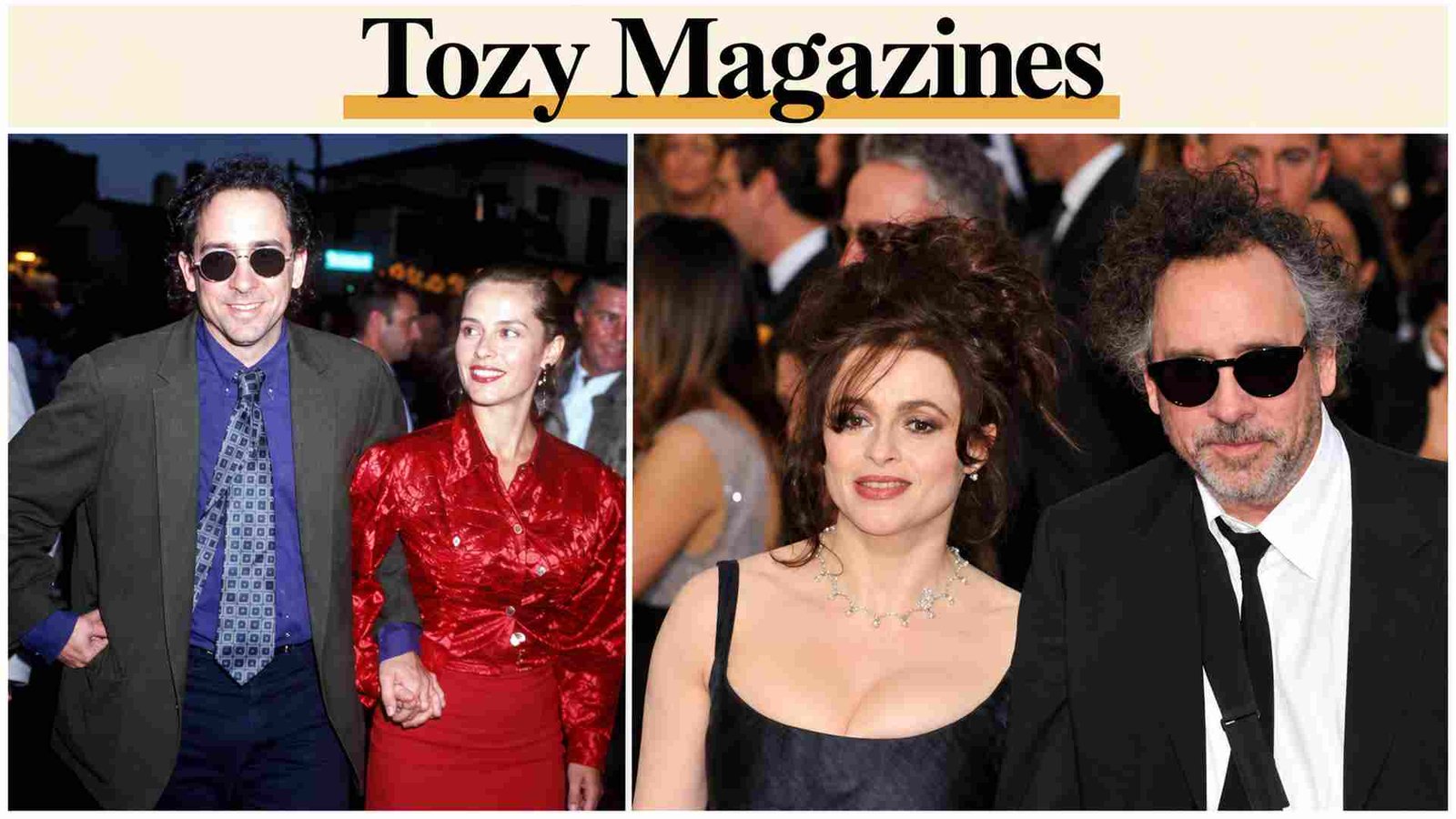
Lena Gieseke is a German professor, film effects artist, researcher, and former software developer. She is also known as Tim Burton’s former wife. Her marriage to the director was brief, but her own career has lasted for decades, and she worked in 3D film effects, earned a PhD in computer science, spent time at Adobe Research, and now teaches at Film University Babelsberg KONRAD WOLF in Germany.
In this article, you’ll learn about Lena Gieseke’s work in film, art, code, and higher education. We’ll also look at her marriage to Tim Burton, their divorce, and why that short part of her life still brings people to her name. Most of all, you’ll see how she built a career that stands on its own.
A Life Better Known Through Her Work
Many people first find Gieseke because of Tim Burton. That is understandable because Burton became one of Hollywood’s best-known directors, and their marriage came during a key part of his rise.
Yet her own story did not stop when the marriage ended. Gieseke spent years in the film effects field, worked with 3D art and software, went back to school for research, earned a doctorate, and moved into teaching.
Today, Film University Babelsberg lists her as a professor of Visual Media Technologies and Technical Direction, and she also helps guide the school’s Creative Technologies master’s program.
That work gives a much fuller view of her life than the label “Tim Burton’s ex-wife.”
She Worked in Film Effects and 3D Art
Before she went back into research in 2012, Gieseke worked for several years in visual effects and 3D computer animation.
Her film credits show what that meant in practice. IMDb lists work on 2012, Immortals, Vicky the Viking, Hotel Lux, and When Santa Fell to Earth.
Her jobs were not all the same, as she worked as a 3D artist, modeler, pipeline technical director, and in research and development for Scanline VFX.
Those roles happen far from the red carpet, and they help teams build the digital parts of a film.
A modeler makes 3D forms, while a 3D artist helps shape how digital scenes and objects look. A pipeline role helps the many parts of a visual effects team work together.
That kind of work needs both art skills and strong tech skills, which also helps explain where Gieseke went next.
Her Film Career Was Her Own
Gieseke’s marriage to Burton can make readers assume that she worked on his movies. Her known screen credits tell a different story because her listed visual effects work includes films such as 2012 and Immortals. It does not place her on Batman or Edward Scissorhands.
That matters because it separates two parts of her life: she was married to a famous director, and she also built her own work in film effects years later. One did not depend on the other.
A 3D Look at Picasso’s Guernica
One of Gieseke’s best-known personal projects is A 3D Exploration of Picasso’s Guernica.
The work takes Picasso’s famous painting and moves through it as a 3D space, giving the viewer a new way to look at shapes that are flat in the original image.
Film University Babelsberg says the piece screened at events in several countries. It appeared at the Independent FilmFest in Osnabrück, Ars Electronica in Austria, and the Seoul Design Fair.
The project says a lot about her interests because it joins fine art with digital tools. It uses code and 3D work to look at an old image in a fresh way, and that same mix of art and tech appears again in her later research.
She Returned to Research in 2012
After years in the film effects field, Lena Gieseke went back to academic work in 2012.
From 2012 to 2015, she held a grant in a digital media PhD program linked with the University of Stuttgart and Hochschule der Medien.
Her main field was computer graphics, and she studied how people can guide computer-made visual patterns.
She finished her PhD at the University of Stuttgart in 2018. Her thesis was about ways to control the computer-based creation of visual pattern designs.
The idea is easier than the title may sound: a computer can make complex patterns from rules, but an artist still needs a way to guide the result. Gieseke’s work looked at how people can keep that creative control.
That topic fits her past because she already knew what artists and film teams need from software, and her research asked how tools could give users more power over what they make.
Four Months at Adobe Research
In 2015, Gieseke spent four months at Adobe Research in San Jose, California.
That visit brought her work into a place known for tools used by artists, editors, and designers, while her work with Adobe led to a U.S. patent called Interactive Generation of Procedural Ornaments.
The project dealt with ways to make decorative patterns with computer rules while still letting a person shape the result. It matched her PhD work and showed how her ideas could move from a research lab into tools for real creative work.
Her Research Kept Growing
Gieseke did not stop with one PhD topic, and her later work has touched computer graphics, 3D film work, software, machine learning, and ways for people to work with computers.
She has also studied tools for animation and the use of tech in film production.
The subjects may sound broad, but they share one idea: she is interested in how people use digital tools to make visual work.
That link runs through much of her career because she first used tools inside the film effects world, then studied how such tools work, and now teaches the next group of artists and technical film workers.
Her Role at Film University Babelsberg
Gieseke now works at Film University Babelsberg KONRAD WOLF in Germany.
Her school profile lists her as Professor of Visual Media Technologies / Technical Direction, and she works in the M.A. Creative Technologies program and helps shape its course plan.
Her teaching covers areas such as computer graphics, software, 3D computer animation, technical direction, machine learning, and how people interact with digital systems.
Film work has changed fast in the past two decades, and a modern production may need artists who understand both images and code.
Gieseke’s career fits that change well because she has worked in film effects, written software, done research, and now teaches students who may need all of those skills in one career.
How Lena Gieseke Met Tim Burton
Gieseke’s link to Tim Burton began before her later film effects and research career became public.
A 1992 Los Angeles Times profile called her a German artist and said Burton met her in London while he was making Batman.
Burton was entering one of the biggest periods of his career, as Batman became a major hit in 1989 and Edward Scissorhands followed in 1990.
They married in February 1989 and divorced in 1991.
The timing tied her name to Burton just as his fame was growing fast, which is why people still search for her through him, even though most of her own career came later.
Their Marriage Ended in 1991
The marriage did not last long, and the Los Angeles Times wrote in 1992 that the relationship had been going through problems.
After the split, Burton stayed in film and went on to direct many more movies, while Gieseke’s path moved in a different direction. She later worked in visual effects, then in research and teaching.
Their lives became separate stories.
Did Lena Gieseke and Tim Burton Have Children?
Lena Gieseke and Tim Burton did not have children together.
Burton later had children during his long relationship with actress Helena Bonham Carter, while Gieseke has kept her private life away from the celebrity spotlight. Most of her later public story comes from her work.
That makes her career the clearest way to follow what came next.
Why Her Career Often Gets Missed
A famous marriage can become the first line in a person’s story and then take over the whole page, and that has happened with Gieseke in many short profiles.
But the years after Burton tell a larger story. She worked in visual effects, made a 3D art film that screened at major events, earned a PhD, worked with Adobe Research, helped produce a U.S. patent, published research, and became a professor.
Those are not side notes because they show a career built at the point where art and computing meet.
From Film Sets to the Classroom
There is a clear line through Gieseke’s work. Film effects taught her how digital tools are used in real production, her Guernica project used 3D tools for art, her PhD asked how people can control computer-made designs, and her work at Adobe looked at ways to create patterns with software.
Her teaching brings those ideas together, and this is what makes her story more than a celebrity connection. She moved from making digital images to studying the tools behind them, then to teaching others how to use and improve those tools.
That is a long career path with its own shape.
Lena Gieseke Today
In 2026, Lena Gieseke is active in teaching and research in Germany.
Film University Babelsberg still lists her as a professor in Visual Media Technologies / Technical Direction, and her work there includes computer graphics, 3D media, software, and creative tech.
Her short marriage to Tim Burton remains part of her public story, and it is also the part that first brings many readers to her name.
But it is not the best way to sum up her life because Gieseke built her own path in film effects, art, code, research, and education. Decades after the Burton marriage ended, that work is the much larger chapter.
If you enjoy stories about people whose own lives are often hidden behind a famous former spouse, read our profile of Mary Marquardt, Harrison Ford’s first wife, next.
