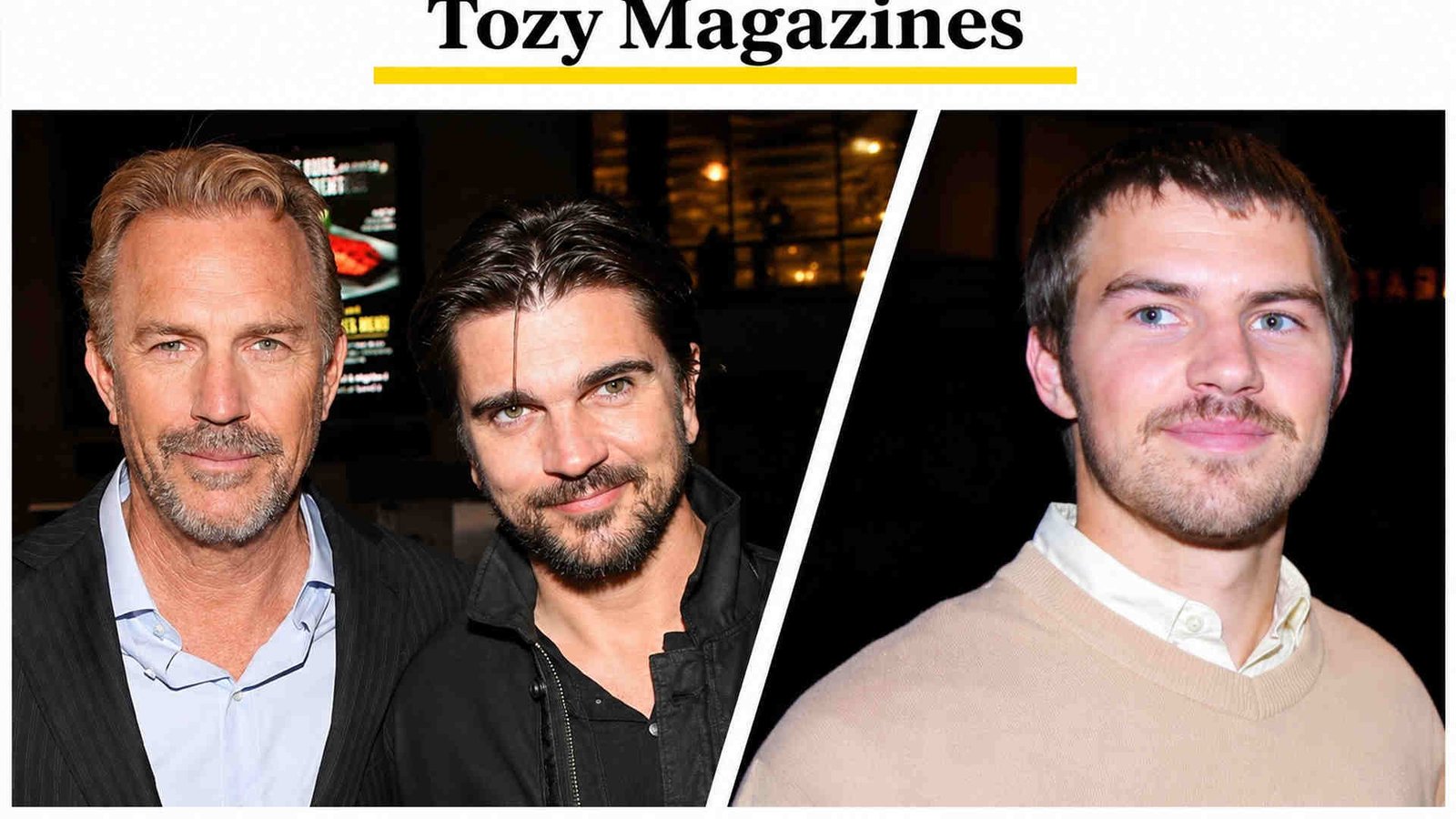
Joe Costner is an American audio engineer and music producer who created Spartan Recording, a mobile studio built inside a restored vintage trailer. He is also the son of actor and filmmaker Kevin Costner and his first wife, Cindy. Joe appeared in films as a child, including Tin Cup and The Postman, but his lasting professional interest has centered on sound, music, and the work that takes place behind the scenes.
Being raised in a famous family brought him close to film sets and creative people. Still, the most revealing part of his story is something he built with his own hands. A 2017 interview with professional audio company Vintage King explains how he spent about a year and a half transforming an old trailer into a working recording space.
In this article, you’ll discover Joe Costner’s early life, film appearances, love of music, studio project, and the work that makes his career different from his father’s.
Quick Bio – Joe Costner
- Full name: Joe Tedrick Costner
- Born: January 31, 1988
- Parents: Kevin Costner and Cindy Costner
- Siblings: Annie and Lily Costner, with younger half-siblings
- Known for: Spartan Recording
- Profession: Audio engineer and music producer
- Earlier acting credits: Tin Cup and The Postman
- Major studio project: A mobile recording room built in a vintage trailer
- Public career interview: Vintage King, 2017
Growing Up in a Family Connected to Film
Joe was born in 1988, when Kevin Costner’s film career was already growing. His parents, Kevin and Cindy, also have two older daughters, Annie and Lily. The siblings grew up with a father whose work could bring unusual demands, including production schedules, travel, and public attention.
That setting explains why Joe had an early chance to see filmmaking at close range. It does not mean he was required to become an actor. Children of famous performers often face that assumption, even when their interests lead somewhere else.
His own later interviews make music an important part of the family picture. Joe has recalled hearing records at home, from stage music to rock and folk. He mentioned Simon and Garfunkel, Phantom of the Opera, and Led Zeppelin as sounds that helped shape his listening habits.
Those memories are useful because they connect a well-known surname with something quite ordinary. A young person heard music at home, became curious about it, and wanted to understand how it worked. That curiosity would have more to do with his adult career than any red-carpet appearance.
The Film Roles He Had as a Child
Joe’s screen record includes small appearances in Tin Cup, the 1996 golf film starring Kevin Costner, and The Postman, the 1997 film his father directed and starred in. These credits are real, but they are a small part of his public work.
It is easy for online profiles to treat every childhood appearance as the beginning of a major acting career. The available record does not support that picture. He did not go on to become a widely known leading actor with a large filmography.
Instead, the early credits show that Joe was present in the film world while growing up. They also offer a simple answer to readers who wonder whether he ever acted with or near his father on screen.
His main professional story took a different turn. Joe became more interested in the tools that capture sound and the choices that help music feel alive. The move from appearing in a film to making recordings is a shift from one kind of creative work to another.
How He First Became Interested in Recording
In his interview with Vintage King, Joe described getting a basic two-track recording interface when he was around 17 years old. He connected it to his laptop and used it heavily. The setup was not a huge studio. It was an early way to test ideas and learn by doing.
That detail matters more than a list of expensive equipment. Small recording tools let people hear the results of their choices. They can try a microphone position, listen back, and understand how sound changes when the setup changes.
Joe also spoke about becoming interested in records and the feel of music made with older methods. Led Zeppelin was one of the groups he connected with that interest. The sound of vinyl and classic rock helped make recording itself exciting to him.
He was not simply interested in who wrote a song or who stood at the microphone. He wanted to learn why a recording felt the way it did. That question can lead a listener toward engineering, production, and all the quiet work needed to make a song sound complete.
The Idea Behind Spartan Recording
Spartan Recording became Joe’s most distinctive public project. Instead of opening a standard studio in a commercial building, he chose to make a mobile recording space in a vintage trailer. The unusual location was part of the idea, not just a decoration.
A mobile setup can bring recording tools closer to musicians. It may also create a different atmosphere from a normal studio. Artists can sometimes work in a place that feels relaxed or familiar, rather than entering a large room with a formal schedule.
Joe chose an old Spartan trailer and rebuilt its interior. In the 2017 interview, he explained that he had spent about 18 months designing and building the space. He measured and cut wood himself, taking an active role in the physical work.
This was more than buying microphones and placing them on shelves. A studio needs room for people and equipment, usable power, reliable connections, and a layout that makes recording possible. Joe had to think about the whole space rather than one attractive piece of gear.
Turning a Vintage Trailer Into a Studio
The trailer project is where Joe’s technical interests and practical effort meet. A normal studio can spread out across several rooms. A trailer has tight limits. Every inch has a purpose, and a badly placed item can make the room harder to use.
He worked with guidance from audio equipment specialists at Vintage King Los Angeles, including Robert Alexander. The project was featured by the company because it showed an unusual way to build a working professional setup.
A key piece of equipment was a Solid State Logic XL Desk. A mixing console helps engineers manage signals from microphones and instruments. It gives them ways to adjust levels and route sound where it needs to go.
Joe explained that the desk helped him learn how the full system worked. Patch bays, preamps, headphones, and other gear all had to work together. Building the room meant getting to know that chain of tools rather than using a finished studio built by someone else.
Why He Chose an Analog Recording Desk
The choice of an analog desk was important to Joe. He told Vintage King that he wanted the trailer to keep an old-school feel. He liked the idea of a space where the physical tools were part of making music.
Analog gear handles sound through electrical signals and hands-on controls. Digital recording uses computer-based tools. Both can create excellent music. The right choice depends on workflow, cost, the kind of session, and the sound a team wants.
For Joe, the limits of the trailer made the setup especially interesting. The console needed to be compact while still offering useful options. He liked being able to work with different preamps and other equipment in one small room.
His choice was not proof that analog is better for everyone. It shows the kind of work he enjoyed. He wanted to touch the tools, learn the connections, and make decisions as sound moved through the studio.
Joe Costner and the Kevin Costner Connection
People often find Joe’s name while searching for Kevin Costner’s children. Kevin’s long film career makes the family familiar to movie fans, and his children have pursued different interests in public life.
Joe’s story is distinct because he is best known through recording rather than acting. Even though he appeared in films as a child, the professional account he gave as an adult focused on sound, craftsmanship, and building a creative workspace.
It is tempting to assume that a famous parent provided every step of a child’s career. Such an assumption would ignore the work Joe described doing himself. It would also make claims about private support that are not needed to understand the studio.
A fair biography can hold both ideas at once. Joe grew up in a family with strong ties to entertainment, and he chose a specific craft that required his own time and skill. One fact does not cancel the other.
What His Career Tells Us About Creative Work
Joe Costner’s public record offers a clear view of his recording project through the 2017 Vintage King interview. It does not provide a complete, up-to-date list of every artist he has recorded or every session he has produced.
That limit is worth respecting. A short public record does not make the studio project less interesting. It simply means readers should not be given invented clients, business figures, or awards to make the story appear bigger.
His most documented work remains the mobile trailer and the decisions behind it. That is enough to show a serious interest in music production. It also makes his career easy to understand for readers who have never stepped inside a studio.
A creative career can begin with a small piece of equipment and grow through many hours of practice. In Joe’s case, the step from a laptop interface to a fully built mobile room shows how curiosity can become a hands-on skill.
Frequently Asked Questions (FAQs)
Who is Joe Costner?
Joe Costner is an American audio engineer and music producer. He is Kevin Costner’s son and is known for building the Spartan Recording mobile studio.
Did Joe Costner appear in movies?
Yes. His listed childhood acting credits include Tin Cup in 1996 and The Postman in 1997.
Who are Joe Costner’s parents?
His parents are actor Kevin Costner and Kevin’s first wife, Cindy Costner.
What is Spartan Recording?
Spartan Recording is Joe’s mobile recording project. He built a studio inside a restored Spartan trailer and equipped it for professional music sessions.
How did Joe Costner learn about recording?
Joe has described using a two-track audio interface with his laptop as a teenager. He later learned more by planning and building his own studio.
Bottom Line
Joe Costner’s surname connects him to Hollywood, but his own work is about sound. He explored film as a child, then followed his interest in music far enough to build a place where recordings could be made. His story shows that an early opportunity does not have to decide someone’s future. Sometimes the most rewarding path is the one you discover by trying, building, and listening closely.
Continue Reading ➔ Naomi Sablan’s creative work behind the camera
