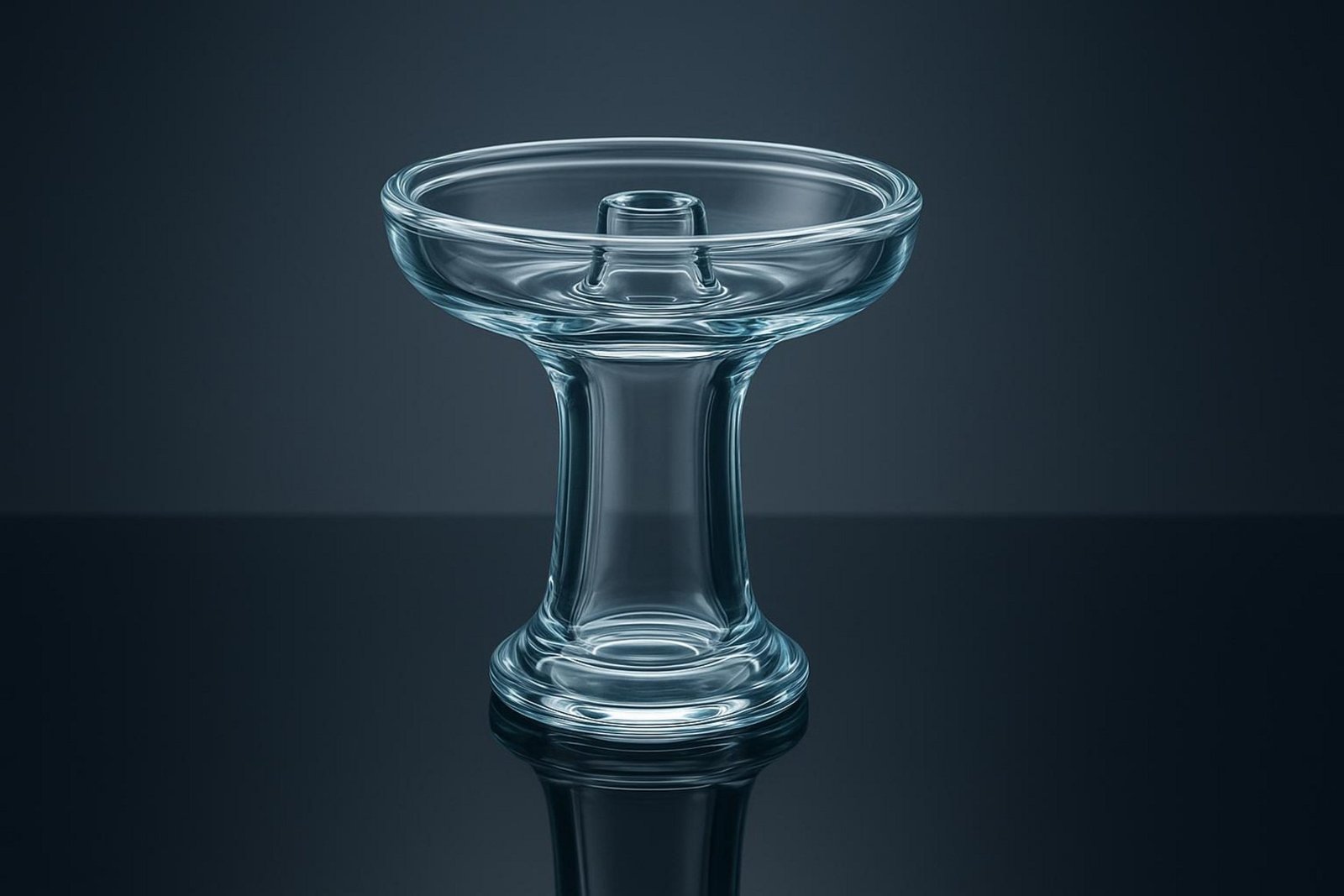
Hookah glass bowls are non-porous containers made mainly from heat-resistant glass. They sit at the top of a waterpipe and hold the tobacco during a session. Since glass does not react with the tobacco or absorb its syrup, it helps preserve the original flavor and prevents old tastes from carrying over between sessions. Clear glass also lets smokers watch the shisha syrup heat and produce vapor. Modern options such as hookah glass bowls combine a clean, modern look with quick heat response, setting them apart from older terracotta and earthenware bowls.
These bowls offer more than a clear appearance. Their shape and material affect how heat moves through the tobacco. Heat from the charcoal reaches the bowl from above, while air moves through the tobacco during each draw. A good glass setup requires an understanding of the bowl material, shape, and heat needs. This helps produce thick clouds without burning delicate flavors.
What Are Hookah Glass Bowls?
A hookah glass bowl, also called a chillum or head, is the upper container of a waterpipe. It holds the shisha tobacco, allows air to pass through it, and warms the mixture during a session. Traditional bowls have often been made from clay, while glass bowls use glassblowing or mold-casting methods to create a neutral surface for tobacco, herbal mixtures, and glycerin-based shisha.
These bowls are made to handle the heat from glowing charcoal while holding the sweet syrups that give shisha its flavor and vapor. Glass has no tiny pores, so it does not soak up sticky syrup. Each session can taste like the blend inside the bowl instead of carrying traces of previous flavors.
How Glass Bowls Fit Into a Hookah Setup
In a hookah, the bowl sits at the top of the central stem and serves as the main heating chamber. Air pulled through the hose passes through the holes in the foil or through a heat management device (HMD). It moves around the hot coals, heats inside the bowl, draws vapor from the tobacco, and then travels through the stem and downstem before reaching the water base.
For good performance, the glass bowl needs to form a tight seal with the hookah stem. Most models have a tapered female base that fits over the stem’s male adapter. A heat-resistant silicone or rubber grommet normally holds the connection in place. Some all-glass hookahs use ground glass joints instead, often in 18.8 mm or 24.2 mm sizes. These joints remove the need for a rubber grommet and create a clean, sealed connection.
How Glass Differs From Clay, Ceramic, Silicone, and Metal
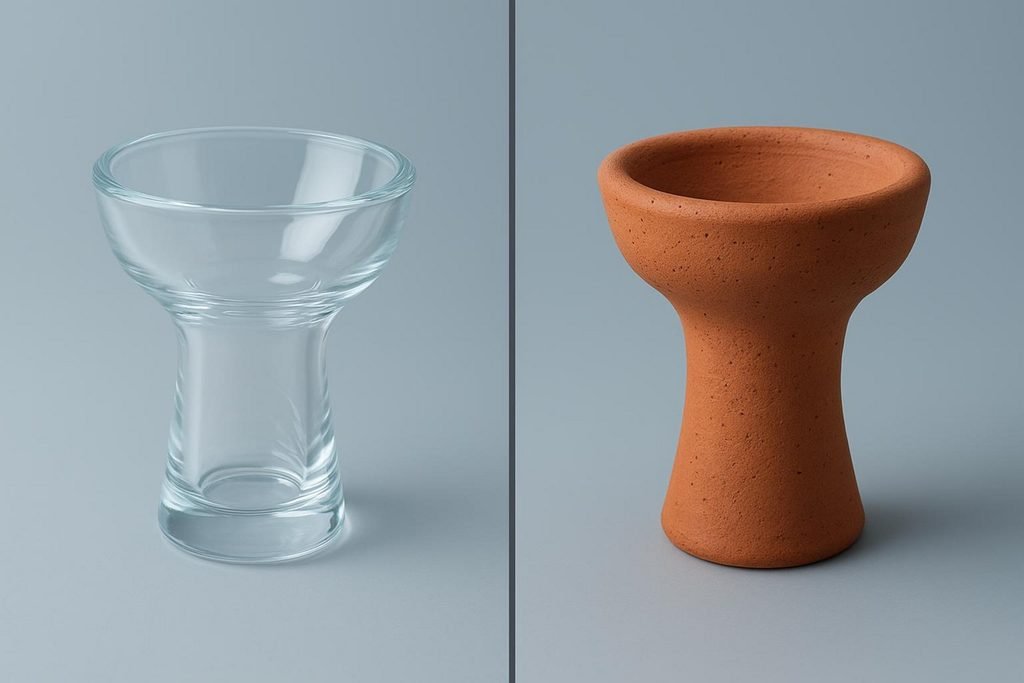
The main difference between glass and clay or ceramic is their pore structure and response to heat. Unglazed clay can absorb dark syrups over time, much like a sponge. It may later release light traces of flavors such as anise or double apple. Glass has no pores, so it cannot hold these old flavors. A quick rinse is usually enough before changing to a different blend.
Metal bowls move heat very quickly and may burn sugary tobacco. Glass transfers heat at a more moderate rate. Silicone bowls mainly block heat and may take longer to heat dense dark-leaf blends. Glass allows strong radiant heat to reach the tobacco without the rubber-like smell that some low-quality polymers can produce near hot charcoal.
Which Glass Is Used for Hookah Bowls?
Ordinary glass is not suitable for a hookah bowl. During a session, charcoal may sit only a short distance from the rim while the lower part of the bowl stays much cooler. This difference creates stress inside the material. Reliable makers usually avoid decorative soda-lime glass and use glass made for high temperature changes.
The glass also needs controlled cooling and annealing after production. This process removes internal stress and lowers the chance of small cracks forming. The type and quality of the glass affect whether a bowl remains usable for years or breaks during its first session.
Borosilicate Glass: Heat Resistance and Durability
Borosilicate glass, especially Borosilicate 3.3, is a common choice for high-quality hookah bowls. It contains silica and boron trioxide and has a very low rate of thermal expansion, about 3.3 × 10⁻⁶ K⁻¹. This is around one-third the expansion rate of ordinary soda-lime glass. The lower expansion helps the bowl handle large temperature differences in a small area without cracking.
Borosilicate glass has an annealing point near 560°C and a softening point above 800°C. This gives it a wide safety margin for natural coconut coals, which usually burn at about 400°C to 500°C. The material also resists chemical damage. Hot fruit molasses and common alkaline cleaning products are unlikely to etch, cloud, or weaken a good borosilicate surface during normal use.
Tempered Glass: Strengths and Limitations
Some hookah products use tempered glass, especially bowls that combine a glass insert with a protective silicone cover. Tempering uses rapid heating and cooling, or a chemical treatment, to create strong compression at the surface. This can help the piece withstand bumps, drops, and contact with hard surfaces better than ordinary annealed glass.
Tempered glass also has a special failure pattern. If a strong impact or heat stress breaks through its compressed outer layer, the stored tension inside can cause the whole piece to break into small, blunt pieces instead of forming one clean crack. It can handle physical knocks well, but high-quality borosilicate usually offers better resistance to sudden, uneven heat from charcoal.
How Glass Quality Affects Safety and Longevity
The quality of the glass has a direct effect on safety during a hot session. Poorly annealed glass may contain hidden stress left behind by fast factory cooling. When the bowl heats unevenly, that stress can cause a sudden break. Live charcoal could then fall onto a table, floor, or carpet.
Good glass usually has even wall thickness, smooth fire-polished edges, and no trapped bubbles or foreign material. A well-made bowl expands and contracts more evenly during repeated sessions. This gives the piece more predictable strength and helps it last longer.
What Designs of Glass Hookah Bowls Are Available?
Glass hookah bowls now come in many shapes beyond the simple cup used in older setups. Their forms suit different tobacco cuts, moisture levels, and smoking styles. Glassblowing and mold-casting methods allow makers to create both familiar bowl shapes and newer airflow designs.
Every shape changes how hot air moves through the shisha and where the syrup collects. The right design depends largely on the tobacco. Dry traditional blends need different treatment from wet, sweet dessert-style mixtures.
Traditional Glass Bowls
Traditional glass bowls copy the shape of many Egyptian and Turkish clay bowls. They usually have a rounded basin and several holes through the flat bottom. During a draw, hot air moves down through the charcoal and tobacco before leaving through these holes and entering the stem.
This setup can give dry or medium-moisture tobacco a strong, full flavor because hot air passes through the whole tobacco bed. With very wet, glycerin-heavy blends, however, syrup may run through the holes and enter the downstem. This can weaken the flavor and make the water base dirty.
Glass Phunnel Bowls
The phunnel shape is a popular choice for modern shisha. Instead of having holes in the bottom, it uses a raised center spire with one wide opening. Tobacco sits in a ring around the spire, forming a small basin that holds its own juices.
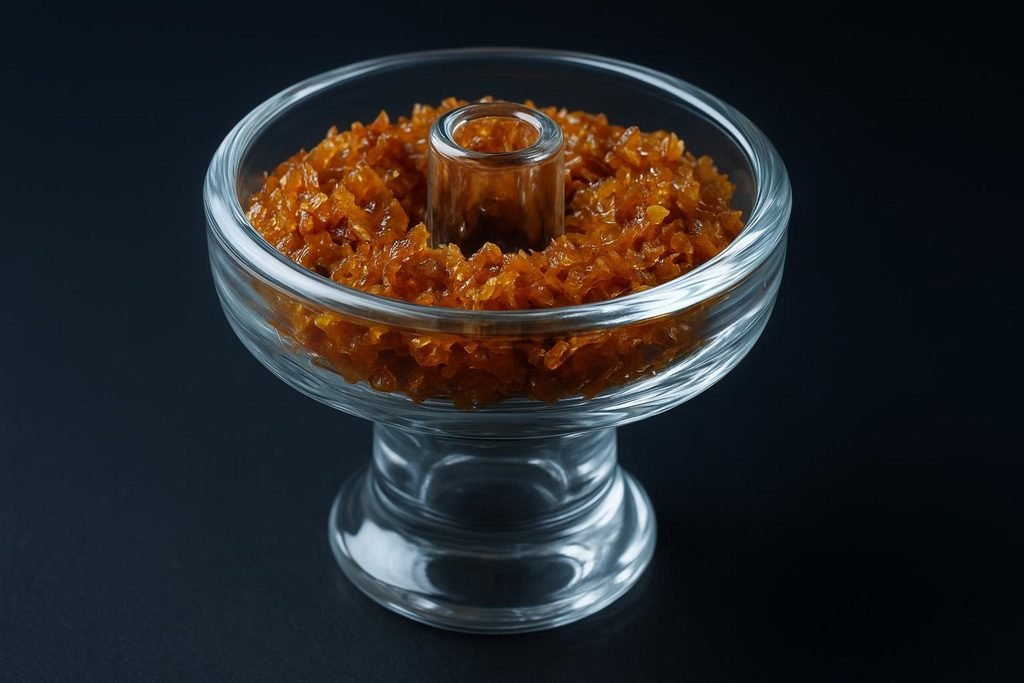
Since the syrup cannot drain through the middle, the tobacco remains in contact with its moisture while it heats. This can add 20 to 30 minutes to a session and produce thick clouds. With a clear glass phunnel, smokers can watch the syrup heat and vaporize around the center chimney without losing it down the stem.
Glass Vortex Bowls
Vortex bowls sit between traditional multi-hole bowls and phunnel bowls. They have a raised center pillar, but the top of the pillar is closed. Small air holes run through the sides of the pillar instead.
This side-entry design keeps the shisha syrup inside the bowl while changing the path of the airflow. As the smoker draws, air moves across the tobacco in a circular pattern. The result is a gentle flow of warm air that heats the tobacco more evenly and helps stop loose leaves from falling into the shaft.
HMD-Compatible Glass Bowls
Heat Management Device (HMD) bowls are made to hold metal heat regulators such as the Kaloud Lotus and similar products. They often have a raised outer lip or a recessed ledge around the rim. This gives the HMD a fixed place to sit.
The ledge helps stop a heavy HMD full of charcoal from sliding if the hookah is bumped. The rim is also shaped to match the HMD’s heat-transfer ring. This spreads indirect heat into the tobacco and reduces the chance of hot spots along the outer edge of the pack.
How Do Glass Bowl Designs Affect Heat and Flavor?
The inside shape of a glass bowl controls heat movement, airflow speed, and how well warm air reaches the tobacco. Unlike an opaque clay bowl, glass lets the smoker see how the tobacco reacts as the session continues. This makes it easier to connect the bowl’s shape with its heating behavior.
Basin depth, air channels, and the amount of glass all affect heat movement. Understanding these features helps smokers prepare the tobacco for better flavor and steady vapor.
Bowl Depth and Tobacco Capacity
Shallow glass bowls, sometimes called alien or low-capacity bowls, usually hold 10 to 15 grams of shisha. The tobacco sits close to the charcoal, so heat reaches the whole pack quickly. This can produce strong, concentrated flavor during a shorter solo session of about 45 minutes.
Deep glass bowls can hold 20 to 30 grams and create a clearer temperature difference between the top and bottom. The upper layer near the charcoal may reach about 150°C, while the lower layers stay cooler and act as a slow source of fresh tobacco and syrup. As the session continues, moisture moves down and supplies new flavor while heat slowly reaches the lower parts of the pack.
Airflow Through Traditional, Phunnel, and Vortex Designs
Airflow resistance affects how the coals cool and how vapor leaves the tobacco. Traditional bowls with several bottom holes can provide an open draw. If the tobacco is packed too tightly over those holes, however, the draw can become hard and the pack may heat unevenly.
Phunnel bowls send air around the center spire. This separates the draw from the pressure of the tobacco packed in the outer ring. Vortex bowls send air sideways through the upper part of the tobacco. They can provide a smooth, steady draw across different tobacco amounts and moisture levels.
Heat Distribution Across the Bowl
Glass conducts less heat than aluminum or brass. It also does not store heat in the same way as thick, porous stoneware clay. Heat in a glass bowl mainly comes from radiation moving down from the charcoal and warm air pulled through the bowl during each puff.
The glass wall does not spread heat outward as strongly as red clay. The outside edge of the tobacco may stay a little cooler than the center. Coal placement and airflow are important for this reason. Moving the coals during the session helps heat the full tobacco bed instead of leaving an unused outer ring.
How Does Glass Compare With Other Hookah Bowl Materials?
Clay, porcelain, silicone, aluminum, and borosilicate glass all react differently to heat and shisha syrup. Many experienced smokers change bowl materials based on the tobacco they plan to use. Light blonde tobacco, for example, may need different heat control from dense dark-leaf tobacco.
Glass offers clear flavor and a clean appearance, but it also responds to heat faster than some other materials. It gives good results when the smoker pays attention to coal placement and temperature.
Glass Versus Clay Bowls
Dense clay, whether glazed or unglazed, remains popular because it is easy to manage. Turkish and Egyptian red clay can absorb and spread charcoal heat through its thick walls. This helps protect the tobacco from sudden temperature increases when too many coals are added.
Glass reacts faster and has a smaller heat buffer. Poor coal control can burn the tobacco sooner than it would in clay. Glass has a clear advantage for flavor purity, though. It does not hold old tobacco oils, rinses clean quickly, and lets smokers change from one flavor family to another without much flavor carryover.
Glass Versus Ceramic Bowls
Cheap ceramic and glazed porcelain bowls are widely available, but their heating can be uneven. Many warm quickly in certain areas and slowly in others. This may create hot spots that burn the upper tobacco while leaving the lower leaves underheated. Their glaze can also develop fine spider-web cracks, known as crazing, where old syrup may collect.
Good borosilicate glass generally heats more evenly than inexpensive ceramic slipware. Its consistent structure reduces sudden hot spots. It also has no separate glaze layer that can crack, flake, or release unwanted material during use.
Glass Versus Silicone Bowls
Silicone bowls are hard to break, which makes them useful for travel, outdoor smoking, and busy lounge settings. Silicone mainly acts as an insulator, however. It does not help send radiant heat through the sides of the tobacco, and direct charcoal use can damage it over time.
Food-grade silicone may also hold strong smells from volatile flavor compounds. Mint and citrus aromas, for example, can remain in the material for a long time. Glass provides a cleaner surface, heats the shisha more directly, and keeps its clear appearance instead of looking dull or rubbery.
Which Material Holds Heat the Longest?
Dense clay and heavy stoneware hold heat the longest. Their thick mineral walls store a large amount of heat and stay warm after the coals begin to turn to ash. This can keep the tobacco cooking at a steady rate.
Glass stores less heat than heavy stone and cools faster after the coals are removed. It needs a steady heat source to keep producing strong vapor, but this quick response can be useful. If the bowl gets too hot, removing a coal lowers the temperature much faster than it would in a heat-retaining clay bowl.
How Do You Choose the Right Glass Hookah Bowl?
Choosing a glass hookah bowl means looking at your smoking habits, group size, preferred tobacco, and current hookah hardware. A bowl that works well with wet blonde tobacco may not perform as well with dry tombak or dense dark-leaf blends.
A suitable shape and solid construction can provide steady, comfortable sessions. Checking a few basic details before buying helps match the bowl to your setup.
Match Bowl Size to Session Length
The amount of tobacco the bowl holds should fit the length of your usual session. For solo smoking sessions of 45 to 60 minutes, a shallow bowl that holds 12 to 15 grams can reduce waste while still producing full flavor and thick clouds.
For group sessions or smoking periods of about two hours, choose a deeper bowl that holds 20 to 25 grams. The larger tobacco bed contains more syrup and can keep producing vapor through several rounds of charcoal. It may need one extra coal during the warm-up period.
Check Hookah Stem and Grommet Compatibility
Before you buy, check the connection at the top of your hookah stem. Most hookahs use a tapered metal stem top that fits into a female bowl base. Measure or check the inside of the glass socket so it sits firmly over the silicone grommet without moving from side to side.
All-glass hookahs often use ground-glass joints instead. In that case, the bowl and stem must have matching tapers, commonly an 18.8 mm male or female joint. An incorrect joint can let air escape or cause the glass pieces to stick together as they heat and expand.
Choose a Design for Your Heat Management Method
Decide whether you plan to use perforated foil or an HMD. With foil, a rounded rim or a phunnel with a center spire below the rim can help keep the foil from sagging into the bowl and blocking airflow.
For an HMD, select a bowl with a retaining lip or ledge made for the device. This feature holds the metal unit in place, supports even heat transfer, and reduces movement as people pass the hose around. Matching bowls and heat management devices are easy to compare at shisha-boutique.com, where you can check which models are designed to work together.
Prioritize Thickness, Stability, and Build Quality
Look at the bowl’s weight and wall thickness. Good models often have basin walls about 4 to 6 mm thick, along with a strong, thick-walled stem. This extra material gives the bowl better resistance to knocks and helps spread heat across the tobacco.
Check whether the top rim is flat by turning the bowl upside down on a level surface. A well-made piece should sit evenly without rocking. This helps create a tight seal under foil or an HMD. Avoid bowls with uneven rims, obvious changes in wall thickness, or sharp edges inside the bowl.
How Do You Pack Tobacco in a Glass Bowl?
Glass bowls need slightly different packing methods because their smooth inner walls do not grip tobacco like textured clay. Leaves and syrup can move more easily during filling and heating.
The clear walls make it easier to check the tobacco level and syrup placement. Adjusting the pack to match the bowl shape helps maintain airflow and allows the shisha to heat evenly.
Fluff Packing for Traditional Glass Bowls
Use a fluff pack for a traditional glass bowl with several bottom holes. Take small pinches of tobacco and drop them loosely into the basin. Let the leaves rest naturally instead of pressing them down. Fill the bowl evenly up to the inner rim.
Before covering the bowl with foil, look through the glass from below and check that the tobacco is not covering the holes. If needed, use a poker or toothpick from the top to clear the openings. Open holes help keep the draw light and allow warm air to pass through the full pack.
Even Packing for Phunnel and Vortex Bowls
With phunnel and vortex bowls, place the tobacco in an even ring around the raised center. Spread it across the channel with your fingers or a shisha fork so that the height remains similar all the way around.
Wet blonde tobacco usually works well with a light, semi-dense pack. Press it down gently until the surface is flat but still soft and airy. The clear bowl lets you check that the center opening is free of loose leaves that could restrict the draw.
Keeping Tobacco Below the Foil or HMD
Keep the tobacco away from direct contact with the heat source. Shisha contains sugar, honey, and vegetable glycerin. If these ingredients touch very hot foil or an HMD plate, they can burn quickly and stick to the glass rim. This may create a harsh taste.
Leave a gap of about 1 to 2 mm between the top of the pack and the bowl rim. This space holds a small layer of hot air that mixes and cools slightly before reaching the tobacco. The shisha can then heat and release vapor instead of burning as soon as it touches the heat source.
How Should You Manage Heat in a Glass Hookah Bowl?
Glass changes temperature quickly and does not have the heavy heat buffer of stone or thick clay. For this reason, the first ten minutes of a session require close attention. Managing a glass bowl is simple once you learn how quickly it reacts.
Start with gentle heating and keep the charcoal placed evenly. This protects the bowl from sudden temperature stress and helps produce cool, flavorful smoke with dense clouds.
Preheating Glass Without Causing Thermal Shock
Warm a glass bowl slowly. Placing several fully glowing coals on a cold bowl can create a sharp temperature difference and may cause cracking, even with borosilicate glass. A gradual warm-up produces smoother clouds and protects the material.
Place the coals near the outer edge of the rim, or set an HMD on the bowl with its vents open. Let the setup sit for five to seven minutes without drawing. This gives the glass and tobacco time to warm gently. Once the bowl is heated, the first draw should produce thick vapor without a burnt taste.
Using Foil, Charcoal, or an HMD Safely
For foil sessions, use heavy-duty foil and pull it tight across the rim. Make small, clean holes in circles across the surface. Put natural coconut charcoal cubes around the outer edge and move them to fresh positions about every 20 minutes. This helps spread the heat across the bowl.
With an HMD, begin with two or three standard coconut cubes, based on the tobacco and bowl size. An HMD can work especially well with glass because its flat aluminum base spreads the concentrated heat from the coals before it reaches the bowl and tobacco.
Signs That a Glass Bowl Is Overheated
Early signs of excess heat include a scratchy feeling in the throat, weaker sweet notes, and a bitter or toasted taste. These signs mean the tobacco is beginning to burn and the heat needs to be reduced.
The clear glass can also show the problem. Violent bubbling syrup or dark, burnt syrup at the top of the pack indicates that the temperature is too high. Remove one coal, clear stale smoke from the base, and take the lid off the HMD if you are using one. The glass should cool fairly quickly once the extra heat is removed.
How Do You Clean and Maintain a Glass Hookah Bowl?
A major benefit of a glass bowl is that it can become clear and clean again after each session. Clay can darken and collect syrup over time, but high-quality glass can keep its clear appearance for years with regular care.
Care mainly involves gentle cleaning and avoiding sudden heat or physical force. These habits keep the bowl sanitary and help preserve clean flavor from one session to the next.
Removing Tobacco Residue After Each Session
Let the bowl return to room temperature on its own before cleaning it. Once it is cool, empty the used tobacco into the trash. Since glass does not absorb syrup, the cooked tobacco often comes out as one piece with little effort.
Rinse the bowl with warm tap water and clean the inside with a soft sponge or microfiber cloth and ordinary dish soap. Light syrup residue should dissolve quickly, leaving the bowl ready for another flavor without much lingering smell.
Preventing Odors, Stains, and Mineral Deposits
Hard tap water can leave cloudy calcium and magnesium marks on clear glass. About once a month, soak the bowl in warm distilled water mixed with white vinegar or lemon juice. This helps remove mineral spots and restore the glass’s clear appearance.
For hard molasses around the rim, do not use a metal knife or fork. These tools can scratch the glass. Instead, mix baking soda with warm water to form a soft paste. Spread it over the residue, wait about ten minutes, and wipe it away with a non-scratch nylon sponge.
Why Abrasive Cleaners and Sudden Temperature Changes Can Damage Glass
Do not use steel wool, wire brushes, or scouring powder on a glass bowl. These materials can make very small scratches in the polished surface. The scratches reduce clarity and create weak points where heat-related cracks may later begin.
Sudden temperature changes are an even bigger risk. Never rinse a hot or warm bowl with cold water, and do not place it on a cold stone counter immediately after smoking. Borosilicate glass handles high heat, but a rapid change from hot to cold can still shatter it.
How Can You Prevent Glass Bowls From Breaking?
Protecting a glass bowl depends on careful handling, safe storage, and regular checks for damage. Treat the bowl as both a hot vessel and a fragile piece of glassware, and it can provide reliable use for years.
Knowing which areas are most vulnerable makes it easier to create safe habits for filling, smoking, cleaning, and travel. Simple handling steps can protect the bowl during every session.
Checking for Chips, Hairline Cracks, and Manufacturing Defects
Inspect the bowl under good lighting before each use. Pay close attention to the top rim, the edge of the center spire, and the socket that connects to the stem. Look for small chips, star-shaped cracks, or thin lines caused by a knock or drop.
A hairline crack can weaken the entire bowl. Heat may cause air inside the small gap to expand and push the crack farther through the glass. If you find a structural crack or a deep chip near an area that will become hot, stop using the bowl and replace it.
Handling a Hot Bowl Safely
Do not pick up or adjust a glass bowl with bare hands while the coals are burning or soon after the session. Clear glass may look cool even when it is hot enough to cause a serious burn. A sudden drop can also break the bowl.
Use heat-resistant silicone tongs with coated tips, or wait 15 to 20 minutes after the session for the bowl to cool. If you need to set it down while it is still warm, use a silicone heat mat, wooden board, or coal tray. Avoid cold marble, granite, and tile surfaces.
Packing and Transporting Glass Bowls
Use extra protection when taking a glass bowl to a lounge, a friend’s home, or an outdoor session. Do not place it loose in a bag beside metal tongs, charcoal tools, or a metal stem. These items can hit the bowl and chip its edges.
A firm, foam-lined accessory case is a good choice. You can also wrap the bowl well in bubble wrap before storing it. A padded pouch reduces scratches and impact damage, helping the bowl stay clean, safe, and ready for the next session.
