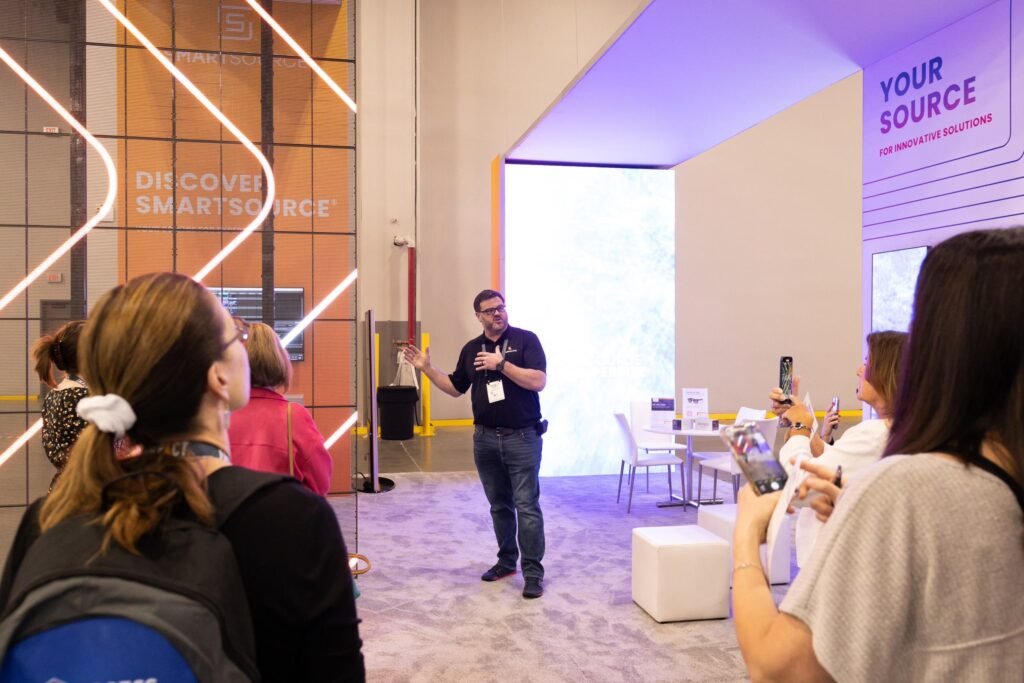
Your booth sits in the middle of a crowded exhibition hall, and people walk past every few seconds. Some stop to chat. Most keep moving. The difference between a successful exhibitor and one who struggles often comes down to how intentionally they design and manage their physical space. Strategic exhibitors understand that foot traffic means nothing without a system to convert passing visitors into meaningful business conversations. Your booth layout, staffing approach, visual messaging, and engagement tactics all work together to transform casual interest into qualified leads.
1. They Prioritize an Open and Inviting Layout
Successful exhibitors recognize that their booth architecture serves as the first point of contact with potential visitors. An open layout with clear sightlines removes barriers that discourage casual visitors from approaching. Rather than creating a closed-off space with tall walls or blocked entrances, effective exhibitors design their booths with wide-open fronts and accessible pathways. This approach signals to passersby that they are welcome to enter and explore without obligation. The physical arrangement communicates confidence and transparency, which helps build trust before any conversation begins. When your booth feels accessible, you naturally attract more foot traffic and create more opportunities for initial dialogue.
2. They Use Strategic Visual Messaging Without Overwhelming Visitors
Your booth signage and visual elements should communicate value quickly, without requiring visitors to read lengthy paragraphs or decipher complex graphics. Successful exhibitors use clear headlines, compelling imagery, and focused messaging that answers a visitor’s most basic question: why should they care about what you offer. Your visuals should highlight a specific problem you solve or a benefit you provide, rather than listing every feature or service in your portfolio. Strategic color choices, high-quality graphics, and readable fonts ensure that your message registers even when someone glances at your booth from across the hall. Professionals selecting modular display systems often rely on MODdisplays to find components that support clear visual communication across a range of booth sizes and formats. The goal is to create enough curiosity or recognition to prompt someone to step closer and engage with your team.
3. They Position Staff Members as Active Conversationalists
The people staffing your booth play a critical role in converting interest into business dialogue. Successful exhibitors train their team members to initiate conversations with visitors rather than waiting passively behind a table or counter. Your staff should be positioned visibly throughout the booth, standing at eye level with visitors and making genuine eye contact. They should ask open-ended questions that encourage visitors to share their challenges, needs, or current situations. This approach transforms your booth from a passive display into an active meeting space where real business conversations can unfold. Visitors are far more likely to engage when they sense genuine interest in their specific circumstances.
4. They Create Designated Spaces for One-on-One Dialogue
Within your booth layout, successful exhibitors establish separate zones for deeper conversations. A high-traffic front area attracts visitors and generates initial interest, while a quieter back section allows your team to conduct more detailed discussions with serious prospects. These secondary spaces might include a small seating area, a demo station, or a consultation corner where conversations can develop without constant interruption from passing traffic. This separation ensures that your specialists can focus on qualified leads without neglecting visitors who are still deciding whether to engage. By managing space strategically, you optimize both the quantity of initial contacts and the quality of follow-up conversations. The physical structure of your booth should reflect the natural progression from casual interest to serious business discussion.
5. They Follow Up Immediately and Document Every Interaction
Successful exhibitors do not rely on their booth presence alone to generate business results. They implement systems to capture visitor information and ensure follow-up occurs while interest remains fresh. Your team should have a reliable method for recording contact details, noting what each visitor discussed, and flagging prospects who expressed specific interest. This practice transforms brief booth conversations into the starting point for ongoing business relationships. According to Exhibitor Magazine, consistent post-show follow-up is one of the most commonly cited factors that separates high-performing exhibitors from those who fail to see measurable results. By treating every booth conversation as the beginning of a sales process rather than the end of it, you maximize the return on your exhibition investment and build momentum from initial contact through eventual conversion.
Conclusion
Converting foot traffic into genuine business conversations requires intentional design, strategic communication, and active engagement from your entire team. Your booth layout, visual messaging, staff positioning, physical spaces, and follow-up systems all contribute to your exhibition success. Successful exhibitors understand that passive displays rarely generate meaningful business results, and they structure every element of their booth experience to encourage interaction and dialogue. The practices outlined here reflect how leading exhibitors approach trade shows as live sales environments rather than static marketing displays. By applying these strategies, you position yourself to engage more visitors, conduct deeper conversations, and generate more qualified leads from your exhibition investment.
